Last Updated on September 17, 2026 by Soumya
San Juan La Laguna was my favorite village around Lake Atitlán. It’s definitely one of the best places to experience Mayan culture and see traditional crafts up close.
San Juan La Laguna is home to the Maya Tz’utujil community, which has preserved a strong cultural identity here. Also, only locals can own land here, which prevents large-scale foreign investment and gives the village its unique local character.
At the same time, this charming lakeside village has developed a thriving network of artists, including many women artists, cooperatives, and workshops. Its colorful streets, murals, textiles, and galleries make it one of the most best places in Guatemala to explore on foot.
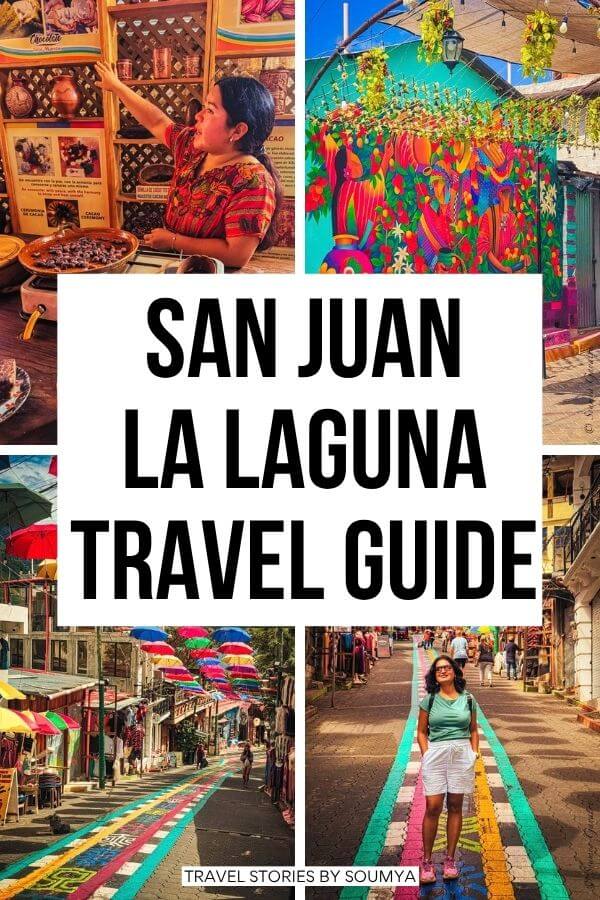
Unlike the other Lake Atitlán villages, such as the busy Panajachel, which is full of nightlife options, the hippie San Marcos, where you can explore yoga, meditation, and tarot reading, or San Pedro, which is backpacker-friendly, San Juan La Laguna is quieter, more artistic, and more immersed in local culture. This was definitely my kind of place at Lake Atitlán.
✦ Pro Tip: Join this highly rated, 3-hour guided tour of San Juan to immerse yourself in the living culture of this ancient Mayan village.
Please note: This post may contain affiliate links which means I may earn a commission if you make a purchase by clicking a link on this post. This will be at no additional cost to you. Affiliate links help me keep this website up and running. Thanks for your support!
Best things to do in San Juan La Laguna, Lake Atitlán
Murals and colorful streets of San Juan
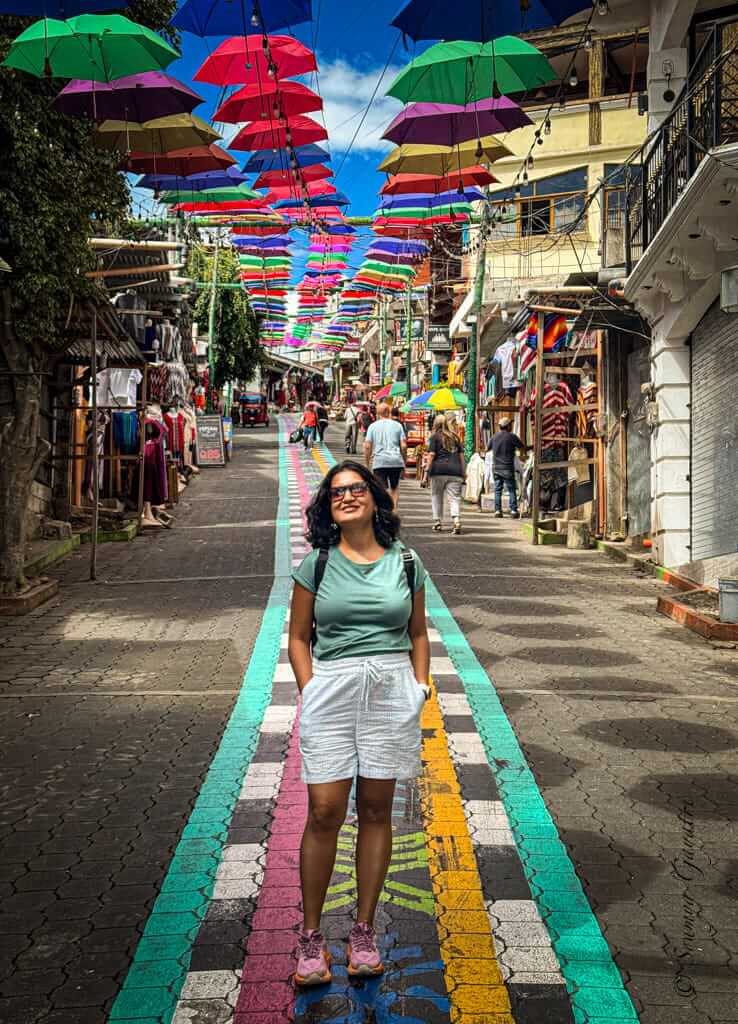
San Juan is almost impossible to photograph without capturing all its colors.
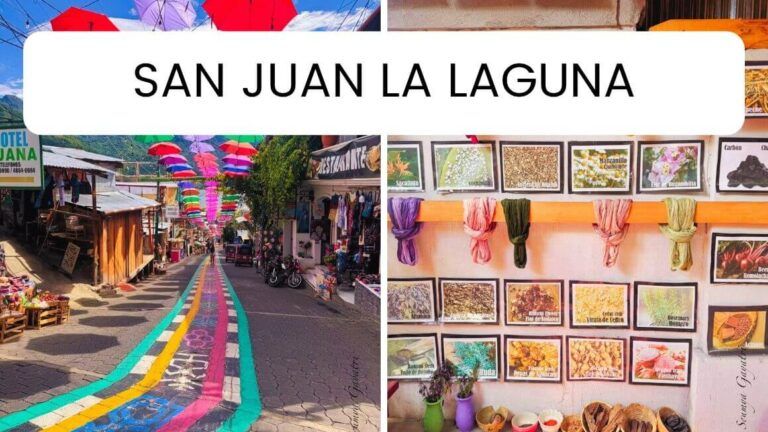
Start at the very Instagram-friendly La Calle de las Sombrillas, or the umbrella street (Google Maps). It leads you from the pier into town, so you can’t miss it.
The town even has a street of hats, or La Calle de los Sombreros (Google Maps), with hundreds of hats suspended from above. You’ll also find painted murals covering walls around this street and across town, plus colorful shopfronts displaying vividly patterned textiles, paintings, and handicrafts.
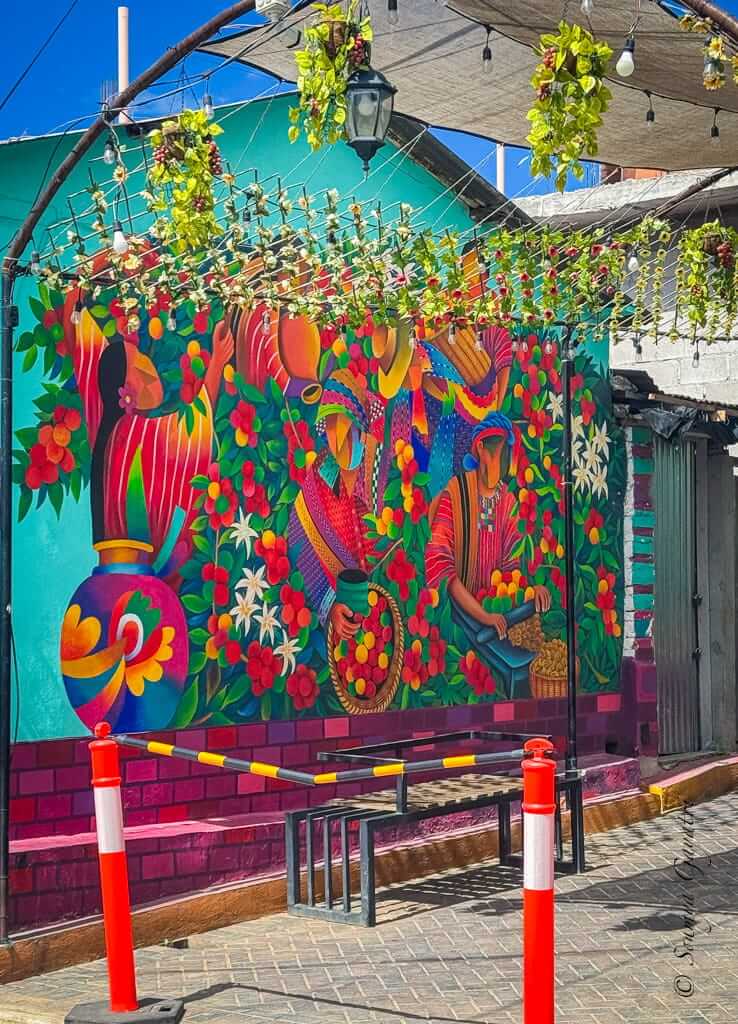
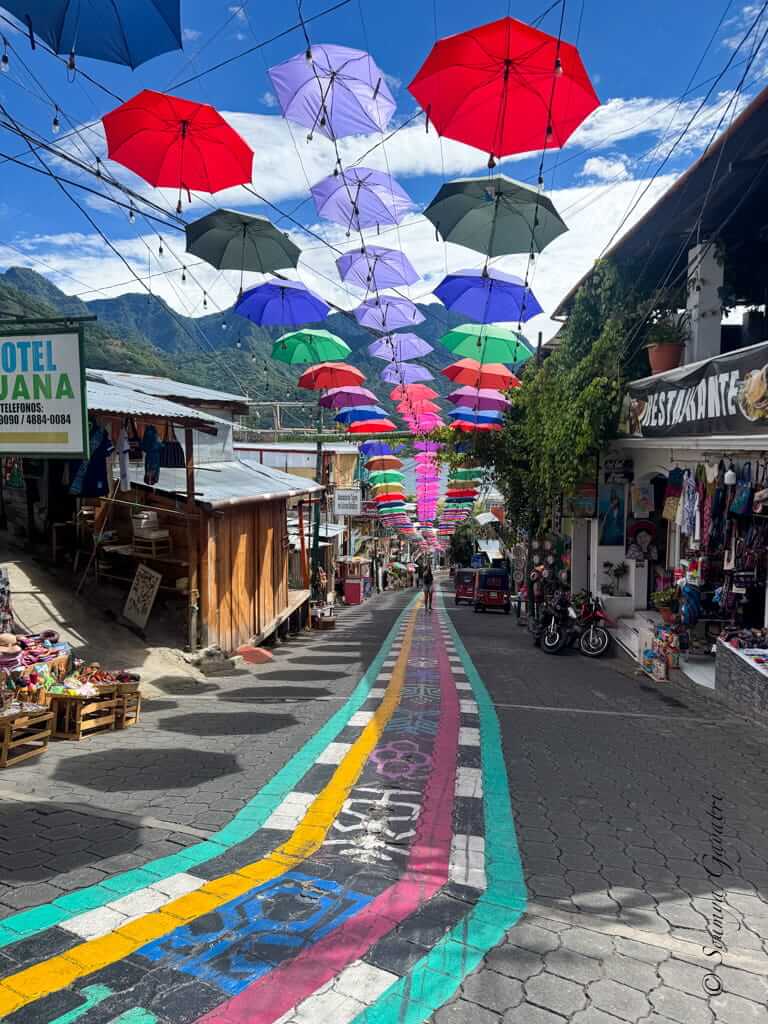
If you’re looking for some more colorful streets, head to Hexagon Street, or Calle de los Hexágonos (Google Maps), covered by dozens of hexagon awnings and beautiful graffiti.
✦ Pro Tip: Explore the town’s murals and colors on this highly rated, 3-hour guided walking tour of San Juan.
Mayan weaving
Visit a Tz’utujil weaving cooperative to learn all about Mayan textile weaving.
Look for traditional backstrap looms and colorful plant- and insect-based dyes used in the weaving process. These ancient dyeing and weaving processes represent ancestral knowledge and the Mayan people’s rich cultural heritage.
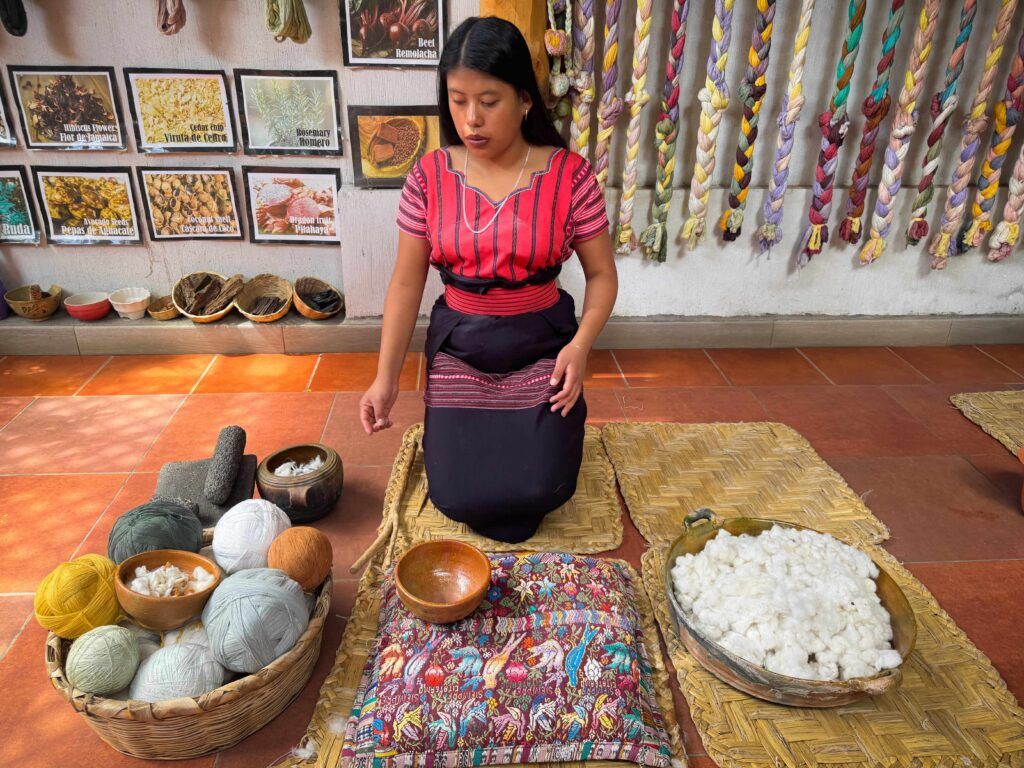
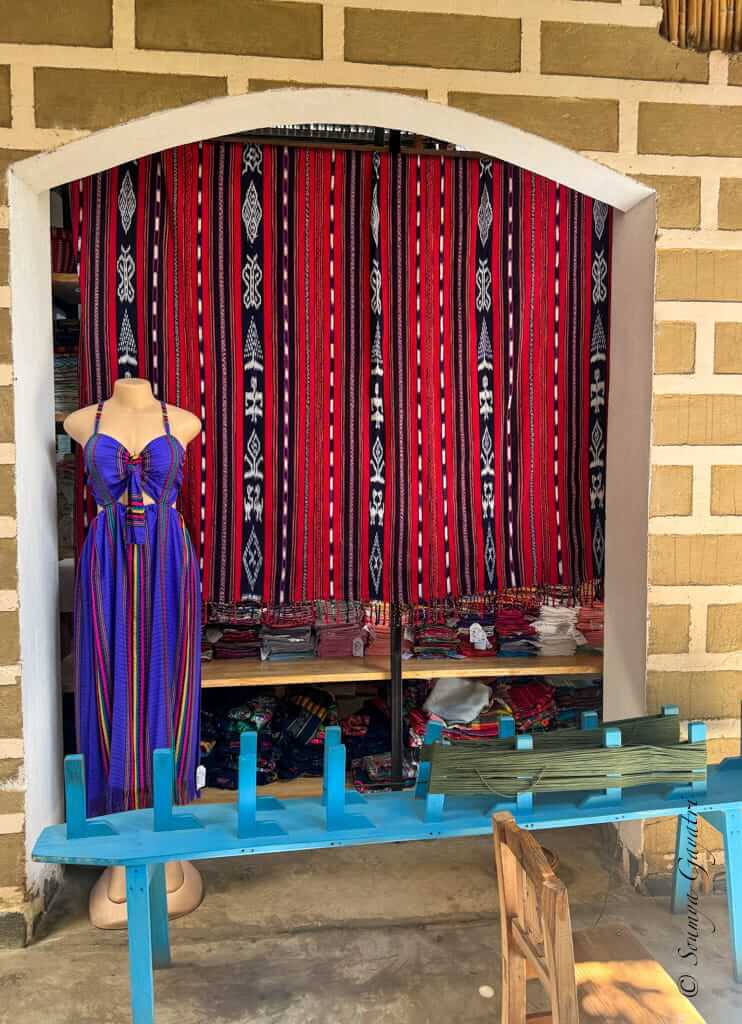
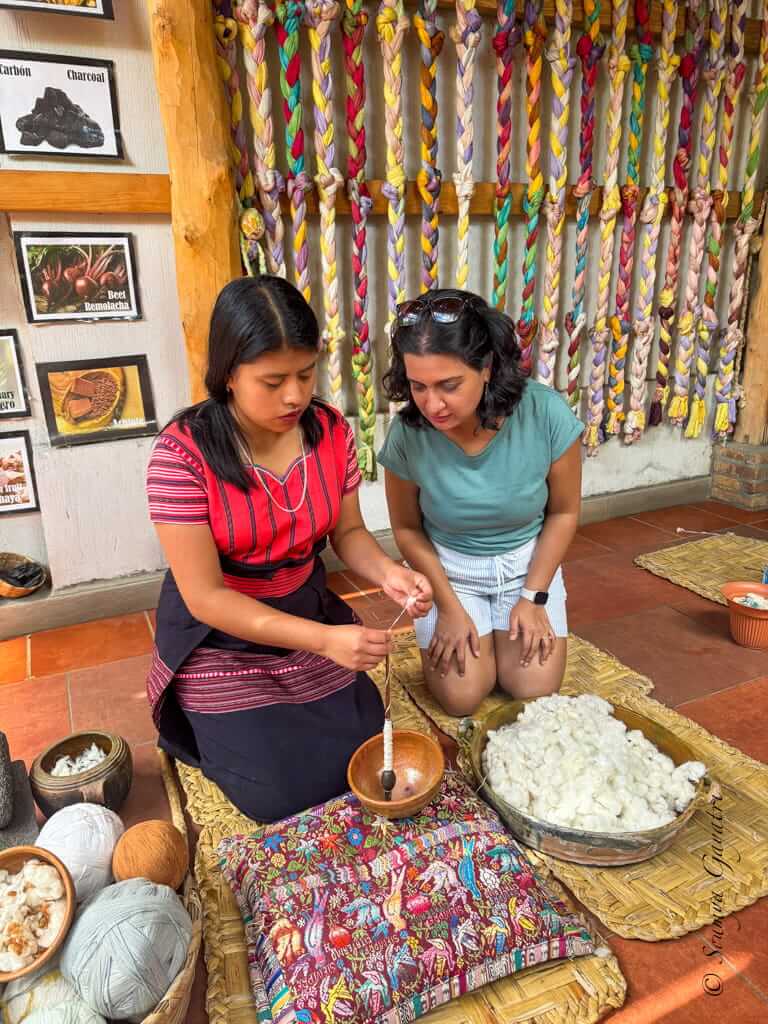
It is a good idea to watch a short demonstration of the weaving process and end by purchasing a woven souvenir from their store. I loved the scarves and the traditional blouses called “huipils.”
Huipils are not just clothing for the Mayans; they are cultural statements. Woven with Mayan patterns and motifs like maize, birds, diamonds, water bodies, and sunlight, they represent ancient beliefs and the region’s cultural highlights. In short, a huipil represents centuries of Mayan history, and buying one from a cooperative in San Juan is a great way to give back to the community.
The best places to see Guatemalan weaving demos and join weaving classes in San Juan La Laguna are:
Casa Flor Ixcaco Weaving Cooperative – a group of 34 women from San Juan that keeps the traditional weaving process alive. Check out the stories of their weaves on their website here. Google Maps location here.
Tinte Maya: Value-for-money weaving classes that offer insights into rich, colorful Mayan culture. Their website seems to have been hacked, but you can find them on Google Maps here.
Tz’utujil paintings
Tz’utujil painting is a beautiful Indigenous art form practiced by Mayan communities living around Lake Atitlán in Guatemala. And San Juan is just the perfect place to explore this art.
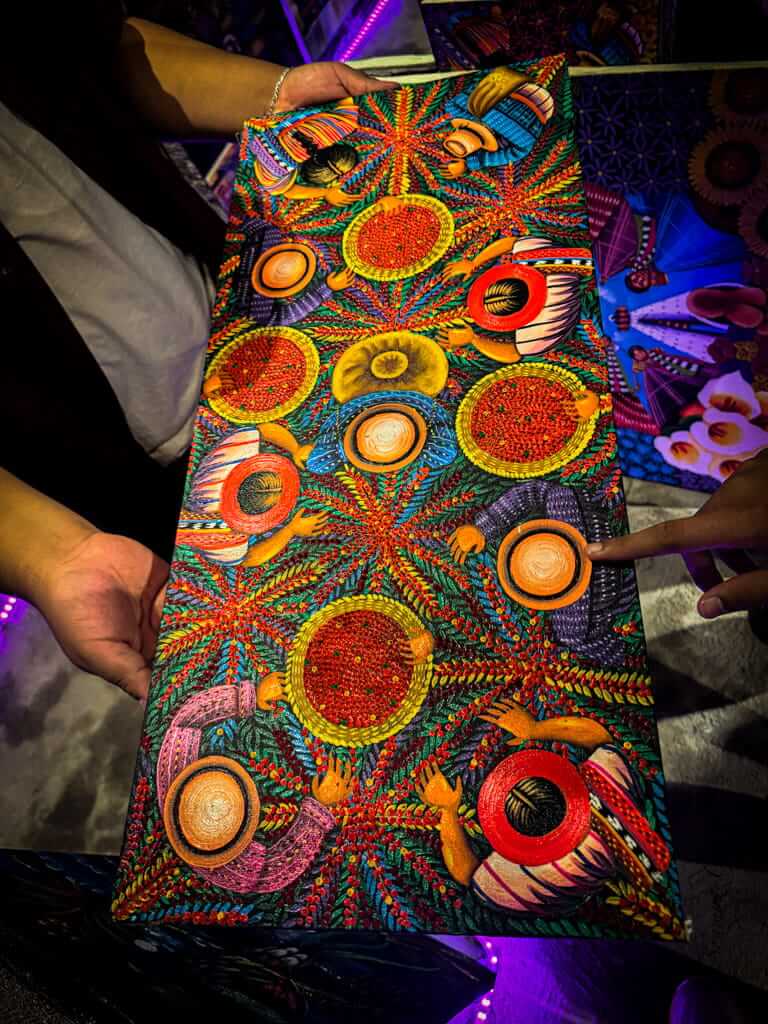
Tz’utujil paintings are vibrant and colorful and made using pointillism – a technique where artists use small dots of color to create the entire composition. They represent everything Guatemalan, from coffee and corn to quetzals and ancestral traditions.
On my San Juan tour, I was drawn not only to their rich colors but also to the concepts behind these paintings.
One of the most common ideas behind Tz’utujil paintings was Vista de Pájaro, or a bird’s-eye view, which depicted busy markets, kayaks filled with flowers, and dense forests viewed from above. The style began in the years of the conquest when the Spanish invaded Guatemalan towns and massacred thousands. Some are believed to have fled into the mountains; their spirits later became birds and watched the world from above, which they began depicting in paintings. Vista de Pájaro paintings are vibrant, stunning, and absolutely one-of-a-kind souvenirs to bring from Guatemala.
A newer style is the fish-eye view, which is basically viewing the world from below. You will find both kinds with San Juan’s artists.
Find the best paintings at Galeria Imox (Google Maps) and Galeria de Arte CHIYA (Google Maps).
✦ Pro Tip: Or click here to join a Tz’utujil painting workshop and make your own little piece of Guatemalan art to take back home.
Guatemalan chocolate
Chocolate has deep roots in Maya culture. Considered the sacred food of the gods, cacao has been used as an elixir, medicine, and currency in Guatemala for centuries.
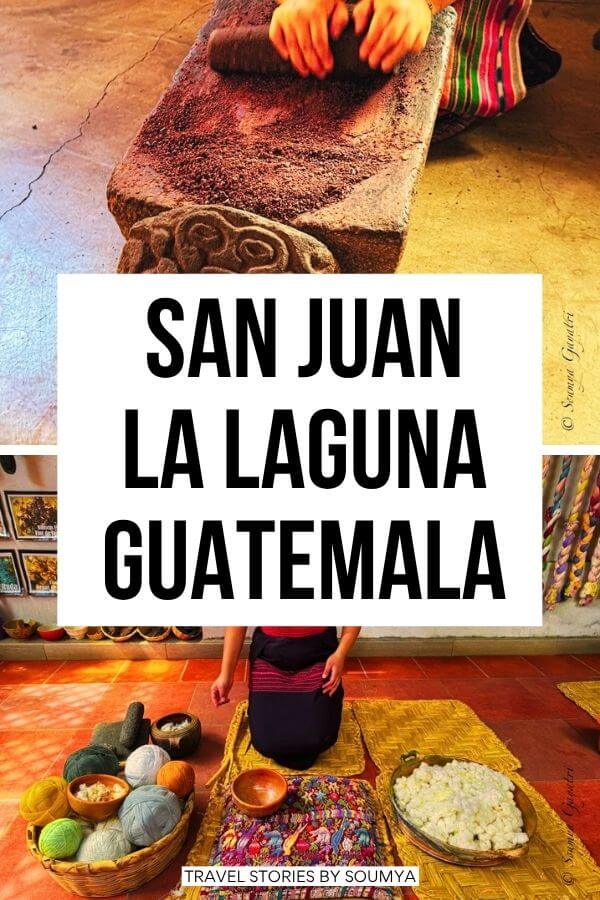
San Juan offers opportunities to learn about the journey from cacao bean to chocolate. Even today, Lake Atitlán’s chocolate makers grind cacao beans with a traditional metate grinding stone and shape them into tablets on a mat called a petate.
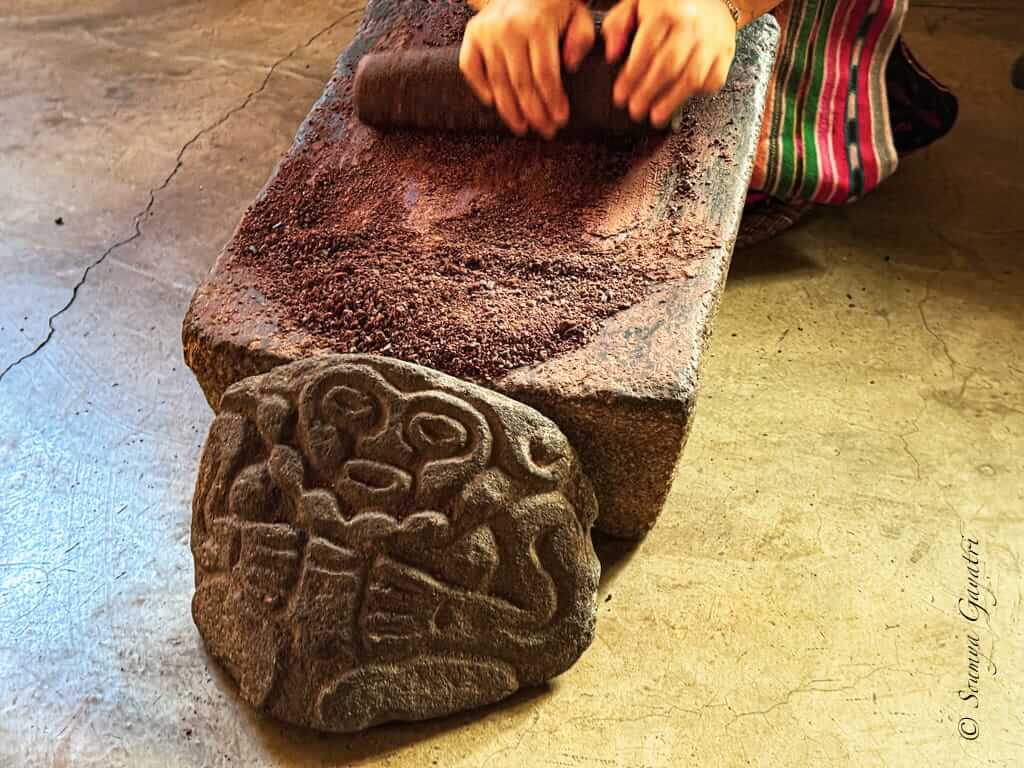
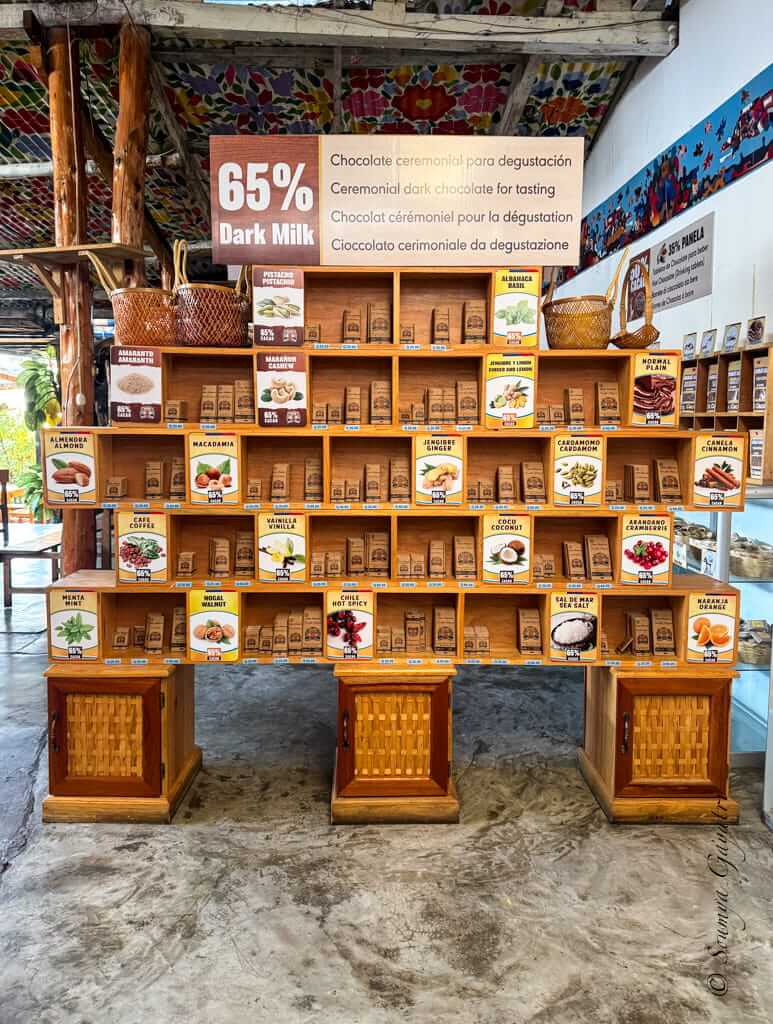
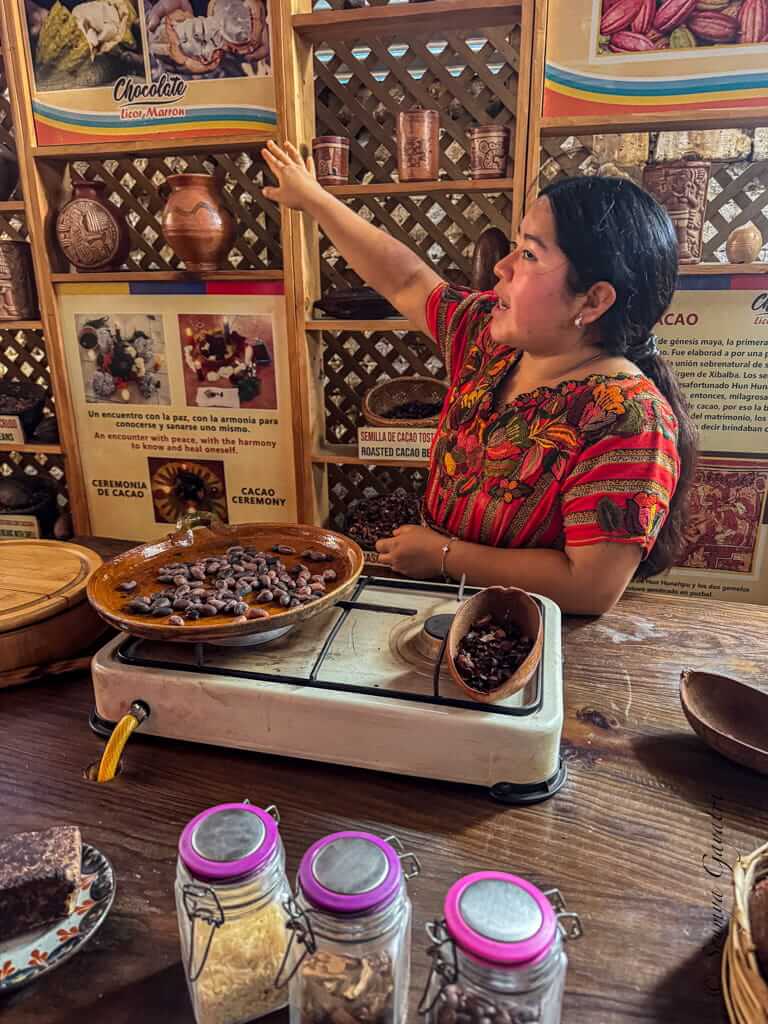
Visit a local chocolate workshop to see how cacao is roasted, ground, and transformed into chocolate. These demonstrations are particularly fascinating because they tell the story of chocolate long before sugar and milk were added and long before it became the world’s favorite dessert.
The best places to taste chocolate, join tours, and buy chocolatey souvenirs in San Juan are:
Xocolatl San Juan La Laguna (Google Maps)
Chocolate Factory (Google Maps)
Licor Marrón -Chocolate (Google Maps)
Mayan bees and honey
Have you heard of the Mayan stingless bees? Unlike the honeybees most of us know, the Maya have been using native stingless bees for beekeeping for centuries.
At Mundo de Abejas Mayas (Google Maps) and Xunah Kaab (Google Maps), you can take tours and learn about this unique species.
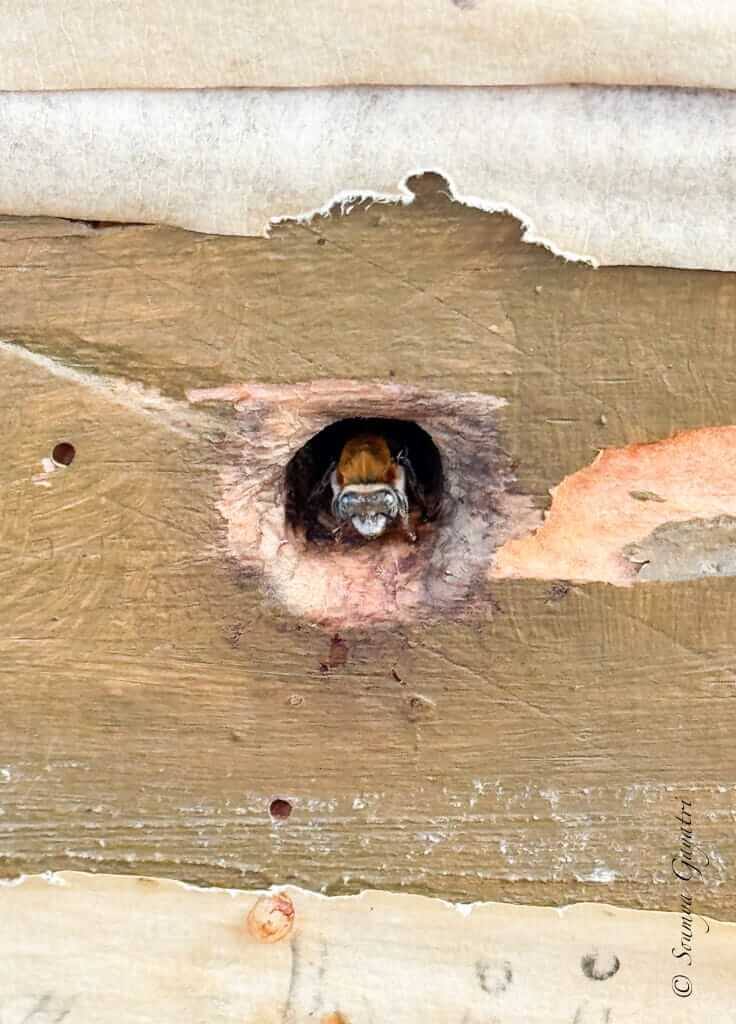
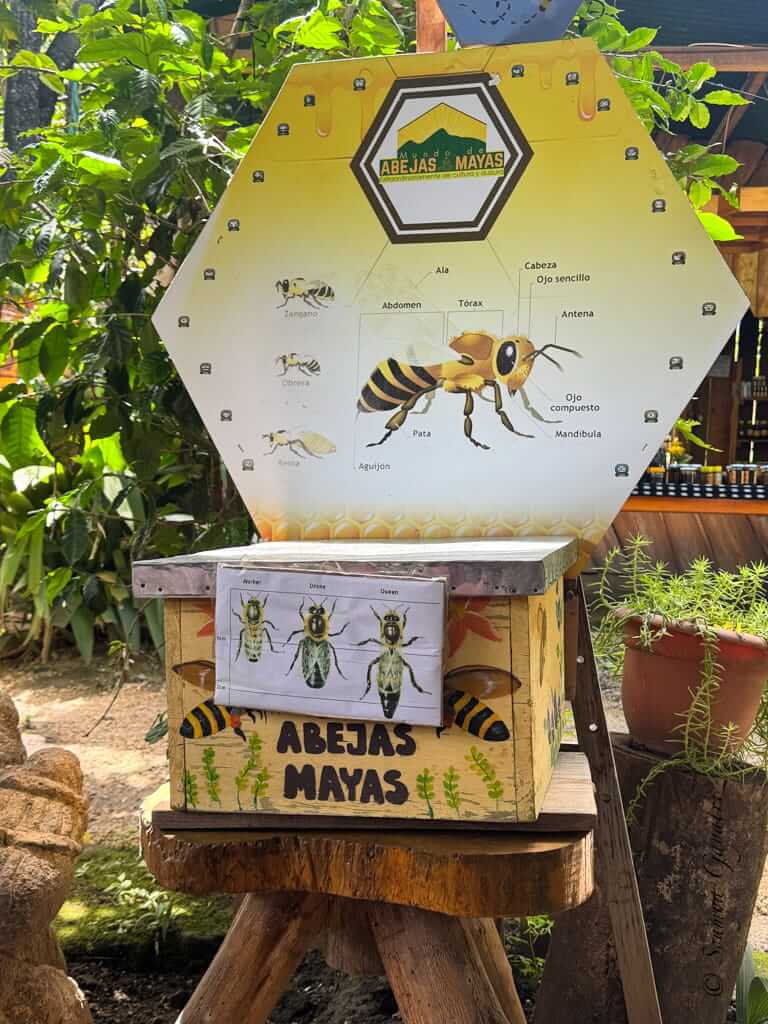
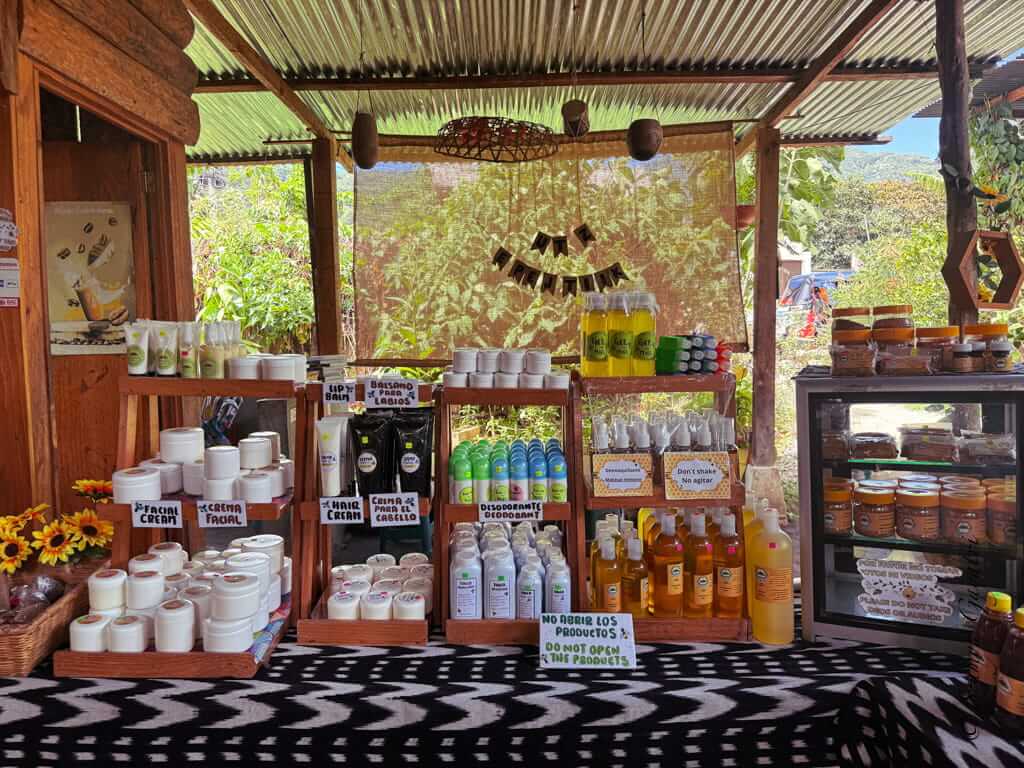
We did an hour-long tour at Mundo de Abejas Mayas that included a short, 15-min free guided tour of the bee farm, where we saw different kinds of bees and learned about the honey they produced. They were free honey tastings included. You can buy honey or a zillion other beeswax products like candles and soaps from the souvenir store on the premises.
✦ Pro Tip: Join this highly rated, 3-hour guided walking tour to immerse yourself in the living culture of San Juan La Laguna.
How to get to San Juan La Laguna at Lake Atitlán?
The easiest way to reach San Juan La Laguna is by boat from Panajachel. Public lanchas, or small passenger boats or water taxis, leave regularly from Panajachel’s main dock called Muelle Tzanjuyú (Google Maps), located at the end of Calle del Embarcadero. The ride costs around 20-25Q (Quetzal) and takes around 30–45 minutes, depending on lake conditions and stops along the way.
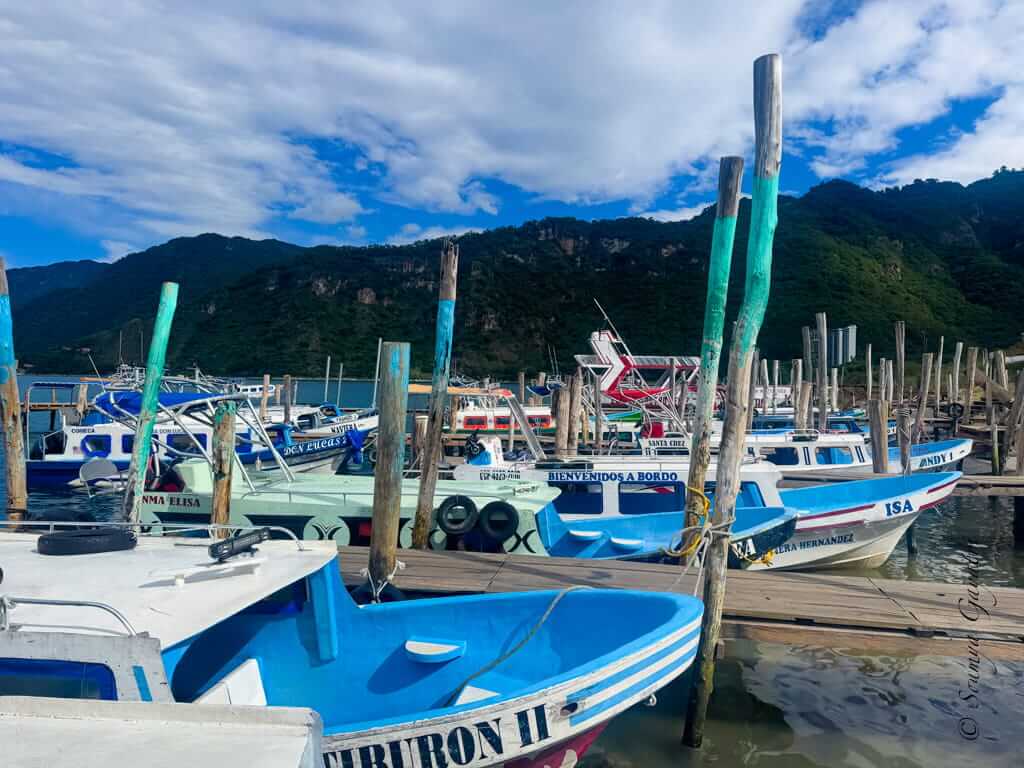
You can also catch a boat from neighboring villages such as San Pedro La Laguna or San Marcos La Laguna. Private boats are available if you prefer a more flexible journey.
By road, you can reach San Juan La Laguna from San Pedro La Laguna by tuktuk. The tuktuk ride costs around 15Q one way and takes about 15 minutes. Once there, the small town is easy to explore on foot.
Where to stay in San Juan La Laguna at Lake Atitlán?
San Juan La Laguna has a good mix of small hotels, eco-lodges, guesthouses, and community-run accommodation. Staying overnight is the best way to experience the village after the day-trippers have left, when its colorful streets and lakefront become much quieter.
For a budget-friendly stay, consider El Chirris B&B. They have amazing hosts and simple, comfortable rooms.
For something more boutique, opt for Casa Don Cristobal Hotel y Restaurante in the heart of town. It offers comfy family rooms with private bathrooms, balconies, and lake or mountain views.
Casa Argentina is a moderately priced accommodation option in San Juan La Laguna. It has great rooms, a sun terrace, and a family-friendly restaurant that serves amazing local food.
Love San Juan La Laguna’s cultural attractions? Pin this to your Guatemala travel board.